
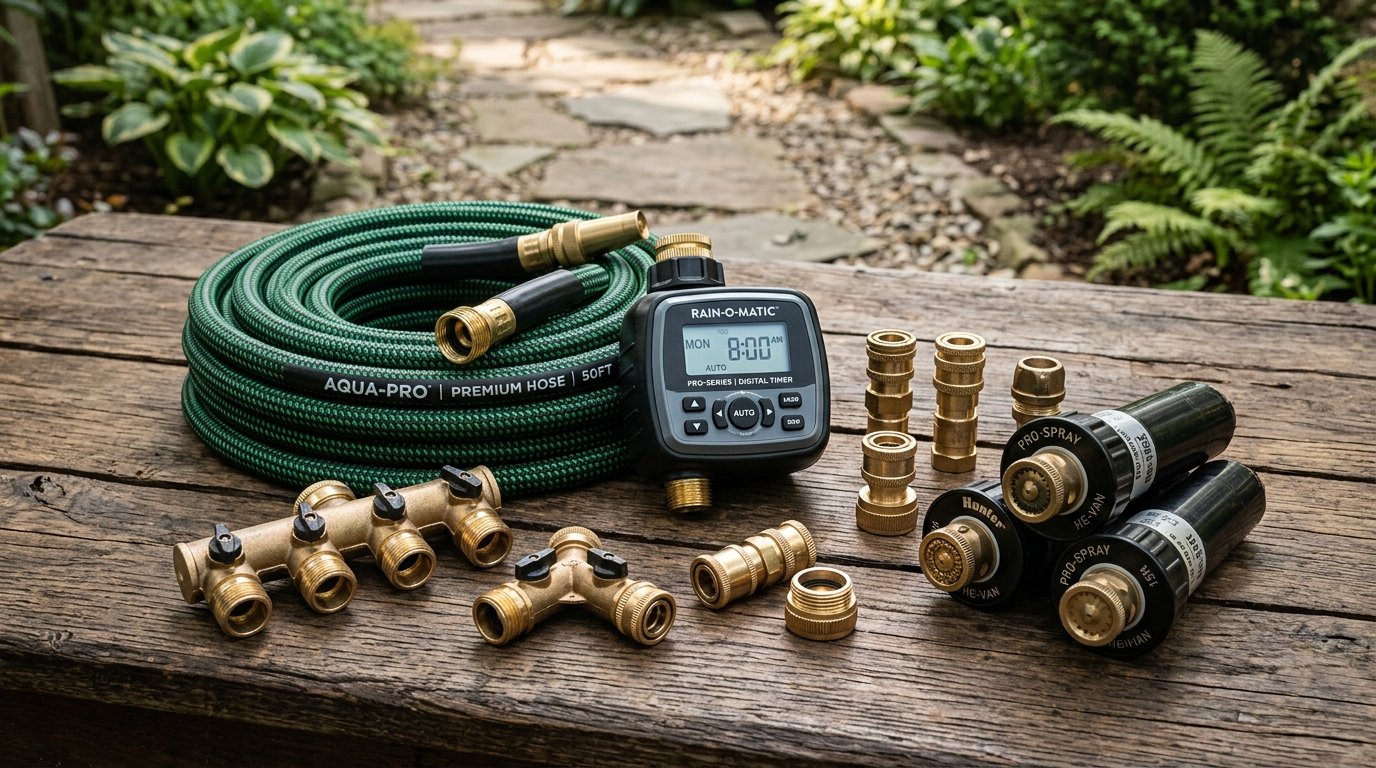
Pipes & Fittings: PEX, Multilayer, Copper, PVC
Showing 217–270 of 401 results
-

Garden Hose Repair Kit
-

Garden Hose Repair Kit
-

Garden Hose Repair Kit
-

Garden hose replacement connector
-

Garden hose splitter
-

Garden hose with 3 extensions
-

Garden Hose with Micro Irrigation System
-

Garden Hose Y Quick Connector 1/2″ 3/4″
-

Garden Hose, In-Line Tap
-

Garden hose, thickened flat garden hoses
-

Garden Irrigation 3/8″ Telescopic Hose Quick Connector Water Gun Car Wash Accessories
-

Garden Irrigation Hose Connector
-

Garden Irrigation Watering Connection Fittings
-

Garden lawn watering hose
-

Garden tools brass 1/2″ water tap for outdoor and indoor use, easy on/off lever handle
-

Garden water connector
-

Garden Water Connector – Plastic Quick Fitting for 8/11mm Hose
-

Garden Water Hose Adapter
-

Garden watering hose set
-

Green Expandable Garden Hose
-

Green Expandable Garden Hose 15
-

Green flexible garden hose
-

H7BF – Expandable Garden Hose Repair Adapter
-

Heavy-Duty Dustproof Oxford Fabric Protective Cover for Garden Hose
-

Heavy-Duty Super Swivel 1/2 Inch Hose Reel
-

High Pressure Flexible Hose with Brass Fitting M22-14/15mm
-

High Pressure Garden Hose for Car Washing
-

High Pressure Replacement Hose 6~20m
-

High Pressure Washer Water Filter Inlet Connector Replacement Tool
-

High-pressure automatic car water hose reel
-

High-pressure car wash hose 6m 8m 10m
-

High-pressure car water cleaning hose
-

High-pressure cleaning hose for Karcher K2
-

High-pressure connection hose for Karcher K2 K3 K5 K7 cleaner
-

High-Pressure Expandable Garden Hose
-

High-Pressure Expandable Garden Hose Nozzle Gun, Garden Hose Set, Multifunctional Metal Spray Nozzle for Car Washing and Plant Care
-

High-Pressure Expandable Garden Hose with Dual Metal Connectors
-

High-Pressure Garden Water Hose
-

High-Pressure Hose 5m/10m/15m/20m
-
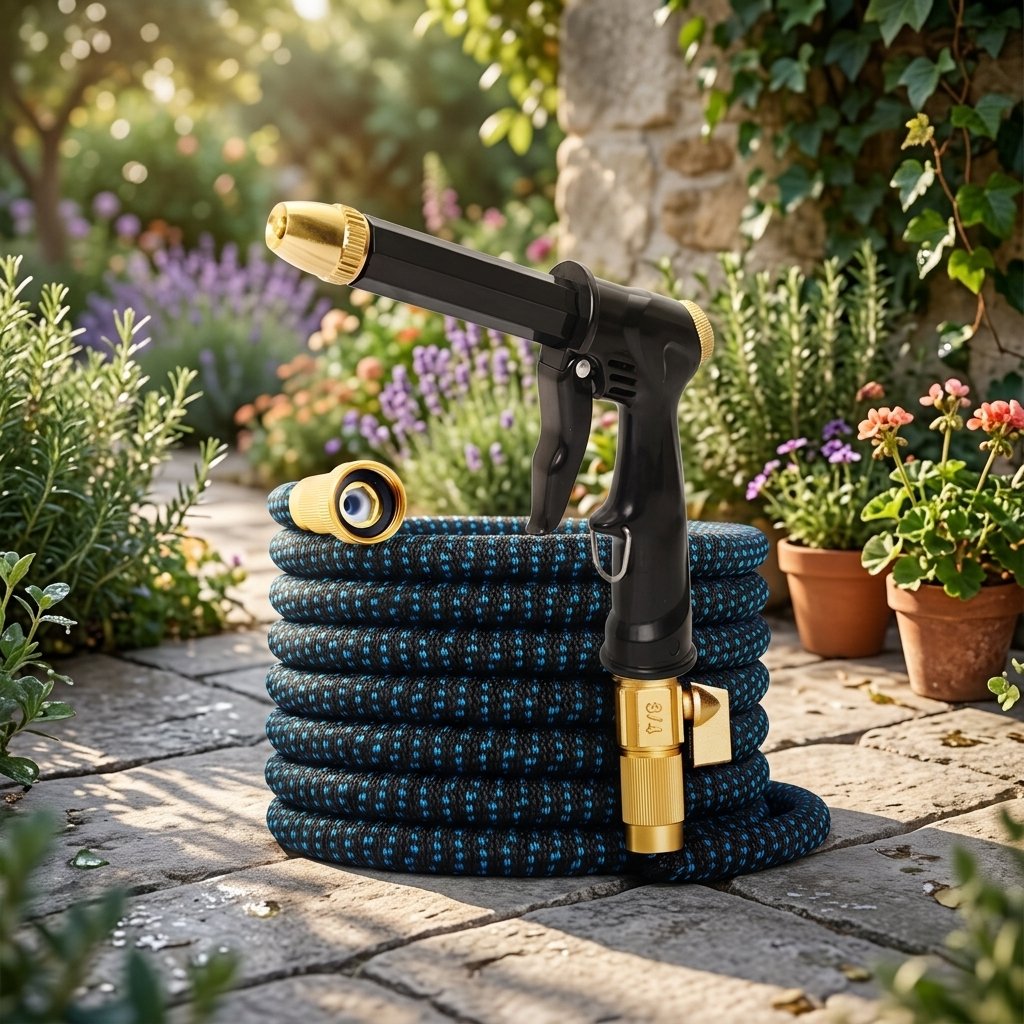
High-Pressure Magic Garden Hose
-

High-Pressure Metal Garden Water Sprayer with Hose Jet for Car Wash Yard Watering
-

High-pressure pipe and sewer cleaning kit with powerful jet washing hose
-

High-Pressure Replacement Hose for Karcher K2 K3 K4 K5 K6 K7
-

High-Pressure Washer Hose
-

High-Pressure Washer Hose 5800 PSI M22-14mm
-

High-Pressure Washer Hose 6~15m
-

High-Pressure Washer Hose with 3/8″ Quick Connector
-

High-Quality Flexible Expandable Garden Hose with Spray Gun
-

Hose 6 8 10 12 14 16mm
-

Hose and Water Odor Adapter for Karcher
-

Hose Connector Set
-

Hose end caps 4/7 mm
-

Hose Reel Irrigation System, Special Offer, Irrigation System
-

Hose Reel Parts Fittings
Pipes and fittings: choosing the right material for your network
An undersized pipe or a fitting that’s incompatible with the existing network material is a guaranteed leak within six months. This category brings together pipes in PEX, multilayer, copper and PVC, along with their matching fittings — crimp, push-fit, compression or solvent-welded — for water supply, drainage and heating. Each family serves a specific purpose: PEX for sanitary water under underfloor heating, copper for exposed installations that need to last 50 years, pressure PVC for outdoor irrigation and drainage.
PEX and multilayer pipe: the standards for new builds and renovation
PEX (cross-linked polyethylene) now dominates sanitary plumbing projects thanks to its flexibility: a 25 or 50 metre coil unrolls directly from the manifold to the water point, with no elbow to solder. Common diameters are 12 mm for individual supply lines, 16 mm for secondary distribution, and 20 to 26 mm for riser columns. Standard NF EN ISO 15875 governs its pressure rating (PN10 or PN16 class depending on wall thickness) and temperature resistance, with continuous performance at 60°C for domestic hot water.
Multilayer pipe combines an aluminium core sandwiched between two layers of PE-RT, giving it a real advantage over pure PEX: it holds its shape once bent, with no shape memory pulling it back to its original position. This makes it the preferred choice for underfloor heating, where the laying pattern needs to stay stable while the screed is poured.
Crimp or push-fit fittings: two techniques, two toolsets
A crimp fitting requires a specific press tool (TH or U jaw depending on the manufacturer) that compresses a stainless steel or brass ring around the pipe once it’s inserted onto the fitting’s spigot. The joint is irreversible once crimped, so it’s essential to check the pipe insertion depth before crimping. Push-fit fittings work the other way round: a PEX ring, expanded cold with an expander tool, retracts back into place afterwards, allowing more tolerance for pipe lengths cut a little short.
Copper: the go-to material for exposed pipework
Hard-drawn (rigid) or annealed (soft, coiled) copper tube remains the material of choice for visible installations, especially in renovations where looks matter as much as performance. Diameters 12/14, 14/16 and 16/18 mm (inner/outer diameter) cover almost all domestic needs. Fittings are soldered with a torch using soft solder (rosin flux, up to 200°C) or capillary brazing for gas lines, or fitted with compression rings for a flame-free installation — useful when flammable materials are nearby.
One thing many people don’t realise: never connect copper directly to galvanised steel without a dielectric union. The galvanic reaction between the two metals speeds up corrosion of the steel, with pinholes that can perforate the pipe in just a few years.
Pressure PVC and drainage PVC: two ranges not to confuse
Pressure PVC (usually grey or blue, rated PN10 or PN16) is used for pressurised water supply for irrigation, pool filling or outdoor networks. It differs from drainage PVC (white or orange, non-pressurised), used for wastewater and rainwater in diameters of 32, 40, 100 and 125 mm. Both are joined with a specific solvent cement after cleaning and priming the surfaces, allowing a drying time of at least 24 hours before pressurising — a joint glued too early will leak under load even if it looks watertight to the eye.
- PEX: domestic water, underfloor heating, conduit-run installation, PN10/PN16
- Multilayer: underfloor heating, networks requiring a stable bend
- Copper: exposed pipework, gas, 50-year lifespan with minimal upkeep
- Pressure PVC: irrigation, pools, buried outdoor networks
- Drainage PVC: wastewater, rainwater, non-pressurised
How to avoid diameter mistakes when ordering
The diameter shown on the packaging sometimes refers to the outer diameter, sometimes the inner, depending on the material — a 16 mm PEX pipe refers to the outer diameter, whereas a 16/18 copper fitting specifies both measurements. Before ordering, measuring the existing pipe with callipers rather than relying on memory or a visual estimate saves you a product return and a job stalled for half a day.
Can you mix materials on the same network?
Yes, as long as you use the right transition fittings: a brass mixed fitting to go from PEX to copper, a dielectric union between copper and steel, a threaded adapter to connect PVC to taps and valves. The same rule applies at every junction point: the fitting’s working pressure must match that of the weaker material on either side of the joint.
How do I choose between PEX, multilayer, copper and PVC pipe for a garden irrigation line?
Match the pipe to the pressure and exposure. PVC (16–50 mm) suits buried mainlines at low cost but degrades in sunlight. PEX resists freezing and bends around obstacles, ideal for cold-climate runs. Multilayer (PE-AL-PE) holds its shape when bent, so it needs fewer fittings. Copper stays best for permanent above-ground feeds near pumps and hot lines.
What pipe diameter do I need for a drip irrigation system?
Size by flow, not by habit. A 16 mm drip line handles roughly 200–250 L/h per run of 50–60 m. Feed it from a 25 mm or 32 mm mainline so pressure stays even across zones. For a garden over 500 m², step up to 40 mm on the trunk and reduce at each manifold to avoid pressure drop at the far emitters.
Which fittings work with which pipe — can I mix systems?
Yes, with the right adapter. PEX and multilayer both take compression or press fittings, but the insert sizes differ, so check the wall thickness marked on the pipe. PVC uses solvent-weld sockets, which cannot join PEX directly — use a threaded pipe-to-pipe transition fitting with PTFE tape. Copper needs solder, press or compression ends. Never solvent-weld anything but PVC.
How do I stop irrigation pipes from bursting in winter?
Drain the system before the first frost: open the lowest drain valve, blow out the lines with compressed air at 2–3 bar, then leave valves half-open. PEX tolerates some expansion and often survives a light freeze; PVC and copper split. Bury mainlines below your local frost depth, usually 60–80 cm, and insulate any above-ground riser with foam sleeve.