
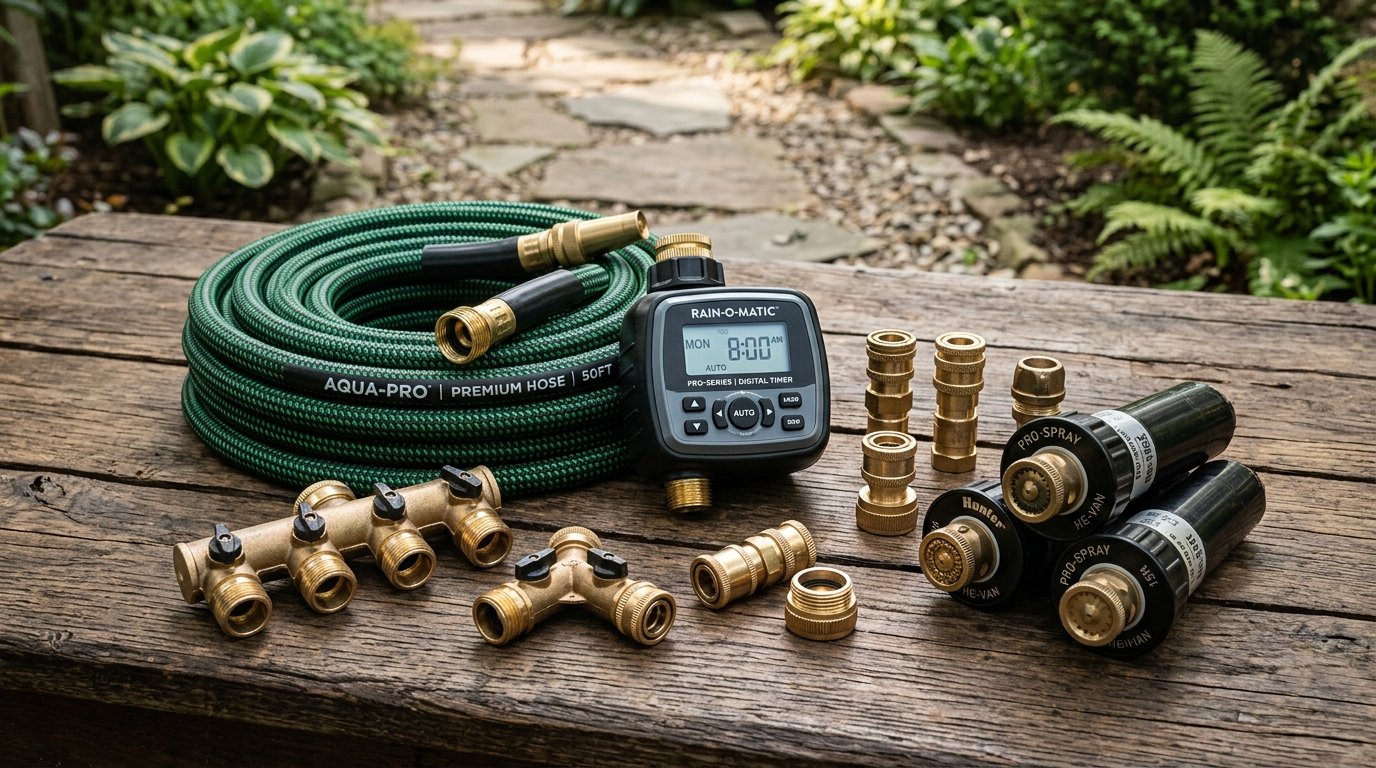
Faucet and Tank Adapters
Showing all 30 results
-

1/2″ Garden Connector
-

1/2″ garden hose connector
-

1/2/5-piece universal brass kitchen faucet adapter
-

1000L water tank adapter S60 * 6 to 1/2” 3/4”
-

16mm Equal Shut-Off Valve Connector for Garden Hose
-

3/4 Inch and 1/2 Inch Garden Hose Tap Connector
-

Anti-Kink Garden Tap
-

Brass Faucet Connector
-

Brass Faucet Connector
-

Brass Garden Hose Connector
-

Brass Quick Connect Tap Connector
-

Brass tap adapter for IBC tank
-

Faucet Adapter for Garden Hose
-

Faucet Adapter for Garden Hose
-

Faucet Hose 1/2” 3/4” 1”
-

Garden Hose Connector Faucet Adapter
-

Garden hose filter
-

Garden hose splitter
-

Garden Hose Y Quick Connector 1/2″ 3/4″
-

IBC Water Tank Adapter S60x6
-

New Hose
-

Quick Connect Adapters for Garden Hose
-

Quick Connector for Household Faucet
-

Quick-Connect Garden Hose Adapter with Shut-Off Valve – Compatible with 1/2″ Hoses
-

Tap Adapter for Garden Hose
-

Universal Faucet Hose Connector
-

Universal Fittings for Garden Watering
-

Universal Garden Hose Adapter
-

Universal Hose Connector for Kitchen Faucet
-

Universal Hose Tap Adapters 15-23mm
The adapters for faucets and tanks are the cornerstone of a reliable watering system. They connect garden hoses, drip irrigation systems or watering equipment to household taps or storage tanks. Choosing the wrong adapter leads to leaks, reduced pressure and premature wear on your setup. This guide covers the technical criteria for selecting the adapter that matches your configuration.
Types of adapters by connection point
Standard faucet adapters
Faucet adapters turn a household water outlet into a connection point for a garden hose. Universal brass models fit both kitchen and outdoor taps thanks to an adjustable sleeve system. Outlet diameter ranges from 1/2 inch to 3/4 inch depending on the desired flow rate. These adapters often include an O-ring to ensure a tight seal on irregular threads.
Adapters for IBC tanks and cisterns
1000-litre IBC tanks use a standardized S60x6 thread that requires a specific adapter. These fittings convert this particular thread into standard 1/2 or 3/4 inch outlets compatible with regular garden hoses. Some models feature a built-in valve to control flow without disconnecting the hose. The preferred material for these adapters is brass or reinforced UV-resistant technical plastic.
Universal multi-function adapters
Universal adapters combine several connection types in a single unit. They offer interchangeable sleeves to fit different faucet diameters and multiple outlets to connect several hoses at once. These models are particularly suited to gardeners managing multiple watering zones from a single water source. Their slightly higher price is justified by their versatility.
Materials and long-term durability
Brass for heavy-duty use
Brass is the quality standard for adapters intended for regular use. This material resists corrosion, withstands high pressure and retains its mechanical properties despite freeze-thaw cycles. Solid brass adapters offer a lifespan of several years even in permanent outdoor use. Their weight reflects the density of the metal and the absence of a lightweight alloy.
ABS and technical PVC plastic
Technical plastics offer an economical alternative for seasonal installations. Reinforced ABS and PVC withstand pressures up to 6 bar and resist UV exposure when treated. These materials suit tank adapters that aren’t subject to repeated mechanical stress. Their light weight makes mounting on elevated tanks easier.
Stainless steel for harsh environments
Stainless steel is ideal for installations exposed to acidic rainwater or salt spray. More expensive than brass, it guarantees absolute resistance to corrosion. This material is the go-to choice for professional irrigation systems or permanent installations in coastal areas. Its precision machining ensures optimal sealing even after several years of service.
Thread diameters and compatibility
1/2 and 3/4 inch thread standards
Household taps mostly use a 1/2 inch or 3/4 inch external thread depending on the country and the age of construction. A 1/2 inch adapter suits flow rates up to 15 litres per minute, sufficient for manual watering or a drip system. The 3/4 inch size allows flow rates above 20 litres per minute, needed to feed several rotary sprinklers at once. Checking your tap’s diameter before buying avoids returns.
S60x6 thread on IBC tanks
The S60x6 thread fits nearly all 1000-litre IBC tanks. This 60mm-diameter thread with a 6mm pitch requires a dedicated adapter that no standard fitting can replace. S60x6 adapters come in single-outlet or multi-outlet versions to distribute water to several circuits. Some include an inlet filter to catch particles present in stored rainwater.
Compatibility with quick-connect systems
Many adapters now offer an outlet compatible with quick-connect systems. These fittings let you attach and detach a garden hose without tools and without leaks. Cross-brand compatibility isn’t always guaranteed, so favour European standards to ensure interchangeability. Click-style systems save significant time when hoses are swapped frequently.
Selection criteria by use case
Heavy-duty or occasional use
Daily watering throughout the season justifies investing in a brass adapter with a reinforced seal. Repeated connecting and disconnecting wears out low-end plastic models prematurely. For weekly use or supplemental watering, a technical plastic adapter offers a satisfying value for money. Frequency of use directly determines the choice of material.
Fixed or mobile installation
A permanent installation on an IBC tank requires an adapter with a silicone seal and an anti-loosening system. Vibrations and temperature changes gradually loosen simple fittings, causing seepage. For seasonal connection on a kitchen tap, a universal model with an adjustable sleeve lets you switch quickly between household use and watering. Adapters with a built-in valve avoid the need to shut off the tap at every disconnection.
- Check your tap’s thread diameter before buying (1/2 or 3/4 inch)
- Choose brass for heavy-duty, permanent use
- Pick a dedicated S60x6 adapter for 1000-litre IBC tanks
- Opt for a quick-connect system if you swap hoses often
- Check for an O-ring to ensure a tight seal
- Prefer models with a built-in valve to regulate flow without disconnecting
- Choose UV-treated plastic for prolonged sun exposure
- Check the maximum pressure your system supports (typically 3 to 6 bar)
Installing and maintaining adapters
Fitting and sealing
Fitting an adapter requires a firm hand-tightening without forcing it with a wrench. Over-tightening deforms seals and cracks plastic threads. Applying Teflon tape to metal threads improves sealing on worn threads. For IBC tank adapters, positioning the O-ring in its groove before screwing on avoids pinching. Testing the installation under pressure before extended use immediately reveals any leaks.
Maintenance and winterizing
Permanent outdoor adapters accumulate limescale and organic residue that stiffen the seals. Cleaning with diluted white vinegar twice a season preserves component flexibility. Before winter, fully disassemble and drain adapters to prevent frost damage. Storing the disassembled parts away from moisture extends their lifespan. Replacing O-rings as soon as they lose elasticity prevents leaks when restarting.
| Adapter type | Recommended material | Outlet diameter | Typical use | Max pressure |
|---|---|---|---|---|
| Kitchen tap | Brass | 1/2 inch | Manual watering | 6 bar |
| Outdoor tap | Brass or ABS | 3/4 inch | Multi-zone irrigation | 6 bar |
| IBC tank S60x6 | Brass or reinforced PVC | 1/2 or 3/4 inch | Rainwater harvesting | 3 bar |
| Universal multi-outlet | Brass | Multiple | Multiple circuits | 5 bar |
How do I choose between a 1/2 inch and 3/4 inch adapter for my outdoor tap?
The choice depends on the flow rate you need and your tap’s thread diameter. A 1/2 inch adapter suits manual watering or a drip system with a flow rate under 15 litres per minute. Choose 3/4 inch if you’re feeding several sprinklers at once or an extended irrigation system needing more than 20 litres per minute. Measure your existing thread diameter, or choose a universal adjustable-sleeve adapter to avoid mistakes.
What’s the difference between a brass and a plastic adapter for an IBC tank?
Brass offers greater durability and stronger resistance to impact and corrosion, ideal for a permanent installation exposed to the elements. Reinforced ABS or PVC technical plastic offers excellent value for money for seasonal use and is lighter, making it easier to fit on an elevated tank. Both materials seal properly on S60x6 threads if the O-ring is correctly positioned. Choose brass for heavy-duty use and UV-treated plastic for moderate use.
For what use is an adapter with a built-in valve preferable?
An adapter with a built-in valve is ideal when you frequently connect and disconnect your garden hose without wanting to shut off the main tap each time. This setup spares the tap from repeated use and lets you regulate flow directly at the connection point. It’s also handy on IBC tanks for isolating the watering circuit without emptying the tank. The valve adds a control point that makes the installation safer in case of a downstream hose failure.
How do I ensure a tight seal on an old tap with worn threads?
On a worn or irregular thread, wrap white Teflon tape clockwise (in the tightening direction) for three to four turns to fill the gaps. Check that the adapter’s O-ring is supple and not hardened by limescale. If the thread is badly damaged, a universal adapter with an elastic sleeve compensates for irregularities better than a rigid-thread model. Hand-tighten until you feel firm resistance, then test under pressure before extended use.