
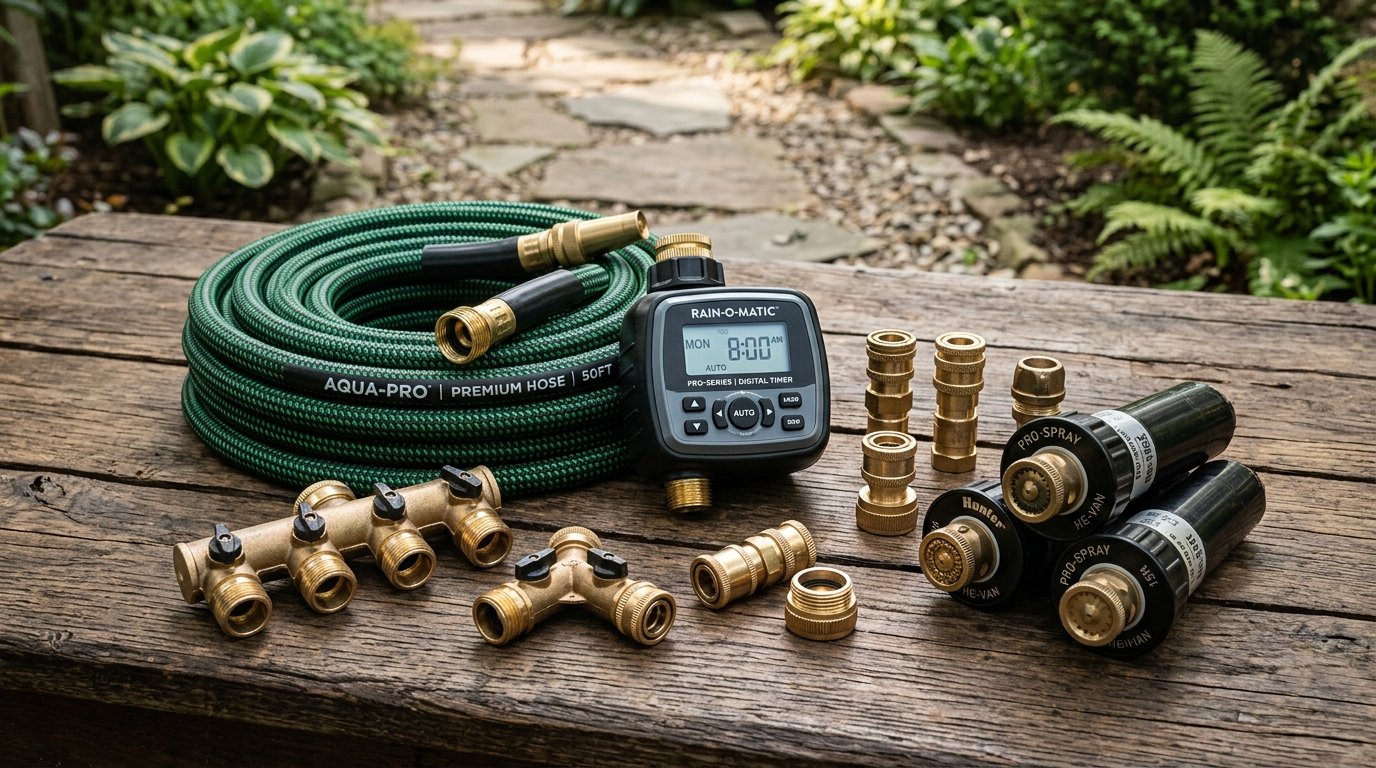
Hose Adapters and Connectors
Showing all 24 results
-

1/2 3/4 1 Inch Garden Hose
-

1/2 In ABS Double Male Quick Connector for Garden Hose
-

1/2 In ABS Double Male Quick Connector for Garden Hose – Extension Adapter Set
-

1/2″ 3/4″ Garden Hose Adapter Dual Quick Connectors
-

25mm (1 Inch) Garden Hose Quick Connector Set
-

3/5 Pairs of Brass Garden Hose Connectors – 1/2″ and 3/4″ Tap Fittings + Quick-Connect Adapters
-

ABS Garden Hose Quick Connector
-

ABS Quick Connector for Garden Hose
-

Expandable Garden Hose Repair Kit, 4 Pieces
-

Garden Hose
-

Garden hose adapter
-

Garden Hose Connection Adapter
-

Garden hose diverter
-

Garden Hose Joint Replacement Adapter
-

Garden Hose Quick Connector
-

Garden Hose Quick Connector Set
-

Garden hose replacement connector
-

Hose Reel Parts Fittings
-

KESLA 2-piece 1/2″ 3/4″ 16mm garden hose adapter, quick connector, stop plug coupler, joint extender for water irrigation tube repair
-

M18 Garden Hose Adapter Set for High-Pressure Washer
-

Quick Water Connector for Garden Hose and Irrigation
-

S60x6 IBC Water Tank Reducing Adapter
-

Water connector for garden hose
-

Water Gun for Garden Hose
Adapters and connectors for hoses are key components of a reliable, high-performing watering system. They let you connect your garden hoses to taps, join multiple hose sections together, or link your water tanks to your setup. Choosing the right fittings ensures your system stays watertight, prevents costly leaks, and guarantees optimal flow for your irrigation needs.
The different types of garden hose adapters
Tap connectors
Tap adapters let you connect your garden hose to different types of taps, whether standard outdoor taps, kitchen faucets, or unequipped water points. Universal models fit most threads thanks to interchangeable washers. Some connectors feature a quick-connect system to attach and detach the hose in seconds, no screwing required.
Hose-to-hose connectors
These fittings are used to extend the length of your setup by joining two hose sections. They come in single (male-female) or double (female-female, male-male) versions depending on your needs. Quick connectors let you assemble and disassemble your setup without tools, ideal for a configuration you can adjust with the seasons. The quality of the internal seal determines how reliably it holds under pressure.
IBC tank adapters
1000-liter tanks use a standard S60x6 thread that requires specific adapters to connect to standard garden hoses. These adapters convert the S60x6 thread to the common 1/2 inch or 3/4 inch diameters. They let you make use of stored rainwater or set up a self-sufficient irrigation system from a tank. Some models include a built-in tap to control flow directly at the tank outlet.
Choosing the right material for your connectors
Brass: strength and durability
Brass remains the go-to material for demanding watering fittings. Its resistance to corrosion, UV exposure, and temperature swings makes it a durable choice that lasts for years without degrading. Brass threads withstand repeated tightening without wearing out, which prevents gradual leaks. For permanent installations or high-traffic areas, brass offers the best longevity despite its heavier weight.
Reinforced plastic: lightweight and affordable
ABS or polypropylene fittings are perfectly suited to moderate-use home installations. Their light weight makes them easy to handle and reduces fatigue during frequent connections. Quality plastics resist UV exposure and temperatures up to 40-50°C, which is enough for most regions. The affordable price lets you equip your entire setup at low cost.
Aluminum and composite
Anodized aluminum combines light weight with mechanical strength, ideal for large-diameter fittings or mobile installations. Newer composite materials incorporate glass fibers to boost strength while keeping weight down. These in-between solutions offer a good balance of performance and budget for users wanting more strength than plastic without the weight of brass.
Diameters and fitting compatibility
Common standards: 1/2″ and 3/4″
Home garden hoses mostly use two diameters: 1/2 inch (12.5 mm) and 3/4 inch (19 mm). 1/2 inch works well for gardens up to 100 m² with pressures of 2 to 4 bar. 3/4 inch is needed for larger areas or drip irrigation systems that require steady flow. Check the diameter of your existing hoses before buying fittings to ensure compatibility.
Universal threads and adapters
Taps come with a variety of threads depending on their origin and use: M22x100, M24x100, or 3/4 inch BSP thread. Universal adapters include several washers of different diameters to adjust to these variations. An adapter kit avoids unpleasant surprises during installation and lets you connect any hose to any water source. Models with an external clamping ring offer a more secure fit than simple compression seals.
Tank-specific fittings
Beyond standard IBC tanks, some agricultural tanks or cisterns use proprietary threads of 2 inches or more. Reduction adapters let you step down from these large diameters to standard garden hoses. For applications requiring high flow, choose adapters that keep a generous diameter as far as possible along the connection chain. Overly abrupt reducers create pressure losses that limit available flow.
Watertightness and leak prevention
Seals and watertightness
EPDM or NBR rubber seals ensure watertightness between connecting surfaces. These seals compress under tightening and create a watertight barrier up to pressures of 6 to 10 bar depending on quality. Replace seals as soon as they show signs of hardening or cracking, typically after 2 to 3 seasons. Double-lip O-rings offer superior sealing for permanent installations exposed to freeze-thaw cycles.
Installation and tightening
Firm hand-tightening is enough for most home watering fittings; over-tightening risks crushing the seal and causing a paradoxical leak. For brass fittings on metal threads, an extra quarter turn after contact ensures a good seal. Clip-on quick connectors need to be pushed in fully until you hear the locking click. Always test your connections under pressure before burying or permanently securing your installation.
How to choose based on your setup
For a residential garden
A garden of 50 to 200 m² only needs brass fittings for fixed points (tap, branch-offs) and quick plastic connectors for mobile sections. Choose a basic kit including a universal tap adapter, two straight connectors, and a hose repair fitting. This setup covers 90% of common needs while staying budget-friendly. Add a tank adapter if you collect rainwater.
For an agricultural or professional installation
Installations under intensive use or high pressure require all-brass fittings with reinforced seals. Farms often opt for hose clamp fittings or Guillemin couplings for larger diameters (25 mm and up). Professional quick-connect systems such as Gardena or compatible types avoid wasted time during frequent reconfigurations. Keep 20 to 30% extra fittings in stock for emergency replacements during peak season.
- Hose diameter: measure the inside diameter of your existing hoses (1/2″ or 3/4″) before buying
- Tap thread type: check whether your tap has a male or female thread and its diameter
- Material: brass for durability, reinforced plastic for moderate, budget-friendly use
- Working pressure: make sure fittings can handle your system’s pressure (generally 2 to 6 bar)
- Fastening system: quick connectors for easy changes, screw fittings for fixed installations
- Compatibility: choose universal adapters if you need to connect different brands or diameters
- Replacement seals: check the availability of compatible seals for future maintenance
- UV resistance: essential for fittings permanently exposed to sunlight
| Adapter type | Main use | Recommended material | Max pressure |
|---|---|---|---|
| Universal tap connector | Tap-to-hose connection | Brass | 6-10 bar |
| Quick connector | Hose-to-hose assembly | ABS plastic or brass | 4-6 bar |
| IBC S60x6 adapter | Tank to 1/2″ or 3/4″ hose | Reinforced plastic | 3-5 bar |
| Hose repair fitting | Joining two cut sections | Plastic or brass | 4-6 bar |
| Reduction adapter | Stepping down from 3/4″ to 1/2″ | Brass | 6-10 bar |
How do I choose between a brass fitting and a plastic fitting?
Brass is the way to go for permanent installations, high-traffic areas, and points subject to repeated mechanical stress. Its lifespan exceeds 10 years even under intensive use, and it withstands pressures up to 10 bar. Reinforced plastic suits mobile sections, seasonal setups, and tight budgets. It stays reliable up to 4-6 bar for moderate home use. For a residential garden, combine both: brass at fixed points, plastic on sections you store away for winter.
What’s the difference between a universal adapter and a standard adapter?
A standard adapter screws onto a precise thread (M22, M24, 3/4 inch BSP) and requires knowing exactly what type of tap you have. A universal adapter includes several washers of different diameters or an external ring-clamping system that adjusts to most common taps. The universal type costs slightly more but avoids buying mistakes and returns. It becomes essential if you need to equip several water points with different threads or if you don’t know your tap’s exact standard.
What is an IBC tank adapter used for?
1000-liter IBC tanks use a standard S60x6 thread that’s incompatible with standard garden hoses. The adapter converts this large thread to the 1/2 or 3/4 inch diameters used by home hoses. It becomes essential if you collect rainwater, store water for irrigation, or set up a self-sufficient watering system from a tank. Some models include a built-in tap that makes it easy to control flow without adding an extra valve. Choose UV-resistant reinforced plastic adapters for a durable outdoor installation.
How do I prevent leaks at fittings?
First check that the rubber seal is in good condition, with no cracks or hardening. Position it correctly in its groove before assembling the parts. Hand-tighten until snug, then add a quarter turn for metal fittings, without over-forcing. For clip-on quick connectors, push the hose in until you hear the locking click. Always test under pressure before final setup. Replace seals at the start of each season if your installation goes through freeze-thaw cycles. A seal that’s too old or poorly positioned is the leading cause of leaks.