
Watering Timers
Showing 109–118 of 118 results
-

Waterproof & Dustproof Weekly Digital Timer with Lock Button
-

Weekly Programmable Digital Timer
-

WiFi Rainforest Misting System Kit
-

WiFi Solar Watering Timer 1/2 Way
-

WiFi Solar Watering Timer 1/2/4 Outlets with Smart Life App
-

WiFi wireless garden water timer
-

WiFi wireless garden water timer
-

WiFi wireless garden watering timer
-

Yieryi 4-Zone WiFi Watering Timer
-

Zigbee/BT Automatic Dual-Outlet Water Timer Watering System
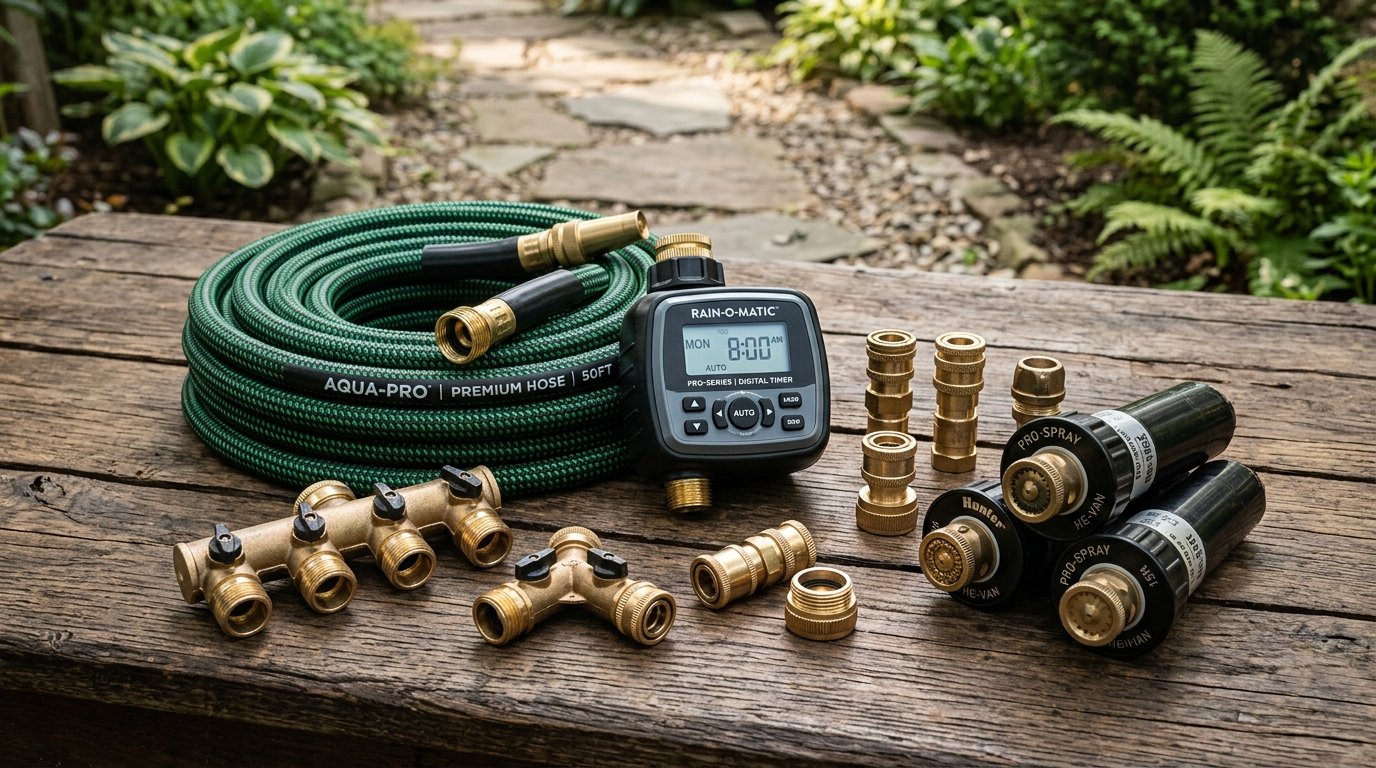
Automating the watering of your garden, vegetable patch or terrace requires a reliable timer that turns the water on and off according to your needs. Watering timers come as simple mechanical models, programmable electronic units or WiFi-connected devices, each suited to different setups and requirement levels. Choosing the right timer depends on the area to be irrigated, the number of zones to manage, whether you’re regularly on site, and your budget.
The different types of watering timers available
Mechanical dial timers
Mechanical timers work by manually turning a graduated dial, typically from 15 minutes to 2 hours. They attach directly to the tap and require no batteries or electricity. Their simplicity makes them sturdy and reliable for occasional watering or short absences. They are ideal for small gardens, balconies, or occasional use with no need for complex programming.
Electronic timers with LCD screen
Electronic timers feature an LCD screen and let you program several watering cycles per day with variable durations and frequencies. Battery-powered, they offer between 3 and 12 months of battery life depending on the model and usage. They generally support 1 to 4 separate programs, allowing you to adapt watering to the different seasons or the specific needs of your plants. Their intuitive interface makes settings easy even for users unfamiliar with electronics.
WiFi and Bluetooth connected timers
Connected models are controlled via a mobile app, wherever you are. They often include rain or moisture sensors, automatically adjusting cycles based on the weather and sending alerts if a problem occurs. Some smart controllers manage up to 6 independent zones and integrate into smart home ecosystems. They are the best choice for large gardens, extended absences, or optimising water consumption using real-time data.
Essential criteria for choosing your timer
Number of zones and programming complexity
A single zone is enough to water a uniform area, such as a vegetable patch or lawn. If you have several flower beds, hedges or zones with different water needs, opt for a 2, 4 or 6-zone timer. Each zone can then have its own program for duration, frequency and start times. Check the number of daily cycles allowed: from 1 to 8 depending on the device.
Compatible pressure and flow rate
Most household timers accept pressures between 0.5 and 8 bar, which covers standard installations. Check your tap’s outlet pressure to avoid surprises. Flow rate depends on the connection diameter: a 15 mm (1/2 inch) thread supports around 1.5 m³/h, a 20 mm (3/4 inch) thread up to 3 m³/h. Match your choice to the number of drippers or sprinklers you’re feeding at the same time.
Power supply and battery life
Mechanical timers are self-sufficient by design, electronic timers run on 2 AA batteries or a 9V battery, and connected timers may accept batteries or mains power. A minimum battery life of 6 months is recommended to avoid frequent replacements during peak season. Solar models exist but remain rare and are reserved for permanent, exposed installations.
Installation and compatibility with your system
Connecting to the tap and hose
Standard connection is made to a 20/27 mm or 26/34 mm threaded tap, the most common sizes in France. The timer screws directly onto the tap, and the garden hose then connects to its outlet. Fit a pressure reducer if your supply exceeds 5 bar to protect the seals and extend service life. Some models include an anti-debris filter, useful if your water contains sand or particles.
Compatibility with your irrigation system
Timers work with all systems: soaker hoses, drip irrigation, oscillating or rotary sprinklers. For drip irrigation, check that the timer tolerates low flow rates without the valve malfunctioning. Underground systems generally require multi-zone controllers with separate solenoid valves, rather than a tap timer. Make sure the residual pressure after the timer stays sufficient for the equipment at the end of the line.
Advanced features and automation
Rain and soil moisture sensors
Some controllers accept external sensors that pause watering in case of rain or if the soil is already moist. This feature prevents waste and protects plants from excess water. Connected models pull online weather forecasts and automatically adjust cycles. Water savings can reach 20 to 40% depending on weather conditions and how well the settings are tuned.
Remote management and notifications
WiFi or Bluetooth timers let you start, stop or change a cycle from your smartphone, even away from home. You receive alerts for low battery, a detected leak, or a lost connection. Some apps log consumption history and offer optimisation suggestions. This transparency makes it easier to diagnose problems and gives peace of mind while you’re away.
Checklist of criteria before buying
- Area and number of zones to irrigate: one zone for simple use, several zones for varied needs
- Type of programming wanted: mechanical for simplicity, electronic for flexibility, connected for remote control
- Available tap pressure: between 0.5 and 8 bar for most models
- Connection diameter: 15 mm, 20 mm or 26/34 mm depending on your setup
- Required flow rate: calculate the number of drippers or sprinklers fed at the same time
- Battery life: 6 months minimum to avoid interruptions during the season
- Compatibility with external sensors: rain, moisture, flow
- Weather resistance: IP65 protection rating or higher for a permanent outdoor installation
- Ease of setup and reading: screen readable in direct sunlight, intuitive menus
- Connectivity: 2.4 GHz WiFi, Bluetooth, compatibility with your smart home hub if needed
| Timer type | Programming | Battery life | Number of zones | Recommended use |
|---|---|---|---|---|
| Mechanical dial | Manual, 15 min to 2 h | Unlimited | 1 | Balcony, small garden, occasional watering |
| Electronic LCD | Daily, weekly cycles | 3 to 12 months | 1 to 4 | Medium garden, vegetable patch, short absences |
| WiFi/Bluetooth connected | Mobile app, sensors | 6 to 12 months or mains | 1 to 6 | Large garden, extended absences, water optimisation |
How do I choose between a mechanical and electronic timer for a medium-sized garden?
For a medium-sized garden, an electronic timer offers more flexibility with several cycles per day and weekly programming. It’s a good fit if you’re often away or if your plants have varied needs. A mechanical timer remains a solid choice for occasional watering or if you’d rather avoid batteries and programming. Weigh up how often you’re away and how willing you are to manage complex cycles before deciding.
What minimum pressure is needed for a watering timer to work properly?
Most household timers work from 0.5 bar, but a pressure of 1 to 2 bar guarantees a stable flow and avoids valve-opening issues. Above 5 bar, fit a pressure reducer to protect the seals and extend service life. Measure your pressure with a gauge screwed onto the tap to check compatibility before buying.
Can a watering timer be used with a low-flow drip irrigation system?
Yes, most timers tolerate the low flow rates of drip irrigation, typically between 2 and 4 litres per hour per dripper. Check that the chosen model accepts low pressures and reduced flow rates without the valve sticking. Some manufacturers explicitly state drip-irrigation compatibility in the technical specs. Favour timers with a built-in filter to prevent clogging.
What’s the difference between a WiFi and a Bluetooth timer for automatic watering?
A WiFi timer connects to your home internet and can be controlled from anywhere via a mobile app, even away from home. Bluetooth limits control to a range of 10 to 30 metres around the device, fine if you stay on site but unsuitable for time away. WiFi models often include advanced features such as pulling online weather data or smart home integration. Choose WiFi for total flexibility, Bluetooth for a simple setup with no internet dependency.